 |
CorTeX Core ABI 7
ToolTech Software · C++ library reference
|
Loading...
Searching...
No Matches
#include <ctxIndex.h>
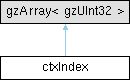
Public Member Functions | |
| ctxIndex (gzUInt32 size, gzBool randomize=TRUE) | |
| gzVoid | randomize (gzUInt32 iterations=1) |
| gzVoid | setEpochOrder (gzUInt32 seed, gzUInt32 epoch) |
| Reset to identity and apply a reproducible train-epoch-permutation-v1 order. | |
| gzBool | setWeightedEpochOrder (const gzArray< gzFloat > &weights, gzUInt32 seed, gzUInt32 epoch) |
| Draw this array's size with replacement from nonnegative finite weights. | |
| gzBool | applyGroupedCycleOrder (const gzArray< gzUInt32 > &sampleGroups, gzArray< gzUInt64 > &groupPositions, gzUInt32 seed=0) |
| Replace each selected sample by the next shuffled member of its group. | |
| ctxIndex | sub (gzUInt32 index, gzUInt32 length) |
| ctxBuffer * | getIndexBuffer () |
Definition at line 29 of file ctxIndex.h.
| ctxIndex::ctxIndex | ( | gzUInt32 | size, |
| gzBool | randomize = TRUE ) |
References CTX_EXPORT, and randomize().
Referenced by sub().
| gzBool ctxIndex::applyGroupedCycleOrder | ( | const gzArray< gzUInt32 > & | sampleGroups, |
| gzArray< gzUInt64 > & | groupPositions, | ||
| gzUInt32 | seed = 0 ) |
Replace each selected sample by the next shuffled member of its group.
grouped-cycle32-v1 preserves the group at every existing index position. sampleGroups maps eligible sample indices to dense group IDs; use GZ_INVALID_INDEX for excluded samples. Each groupPositions entry counts previously consumed members and must initially be zero. Keep it across epochs and bind/save it together with seed, group membership and order. Each group uses setEpochOrder() and completes a permutation before repeating. This deliberately replaces within-group sample probabilities; it does not preserve arbitrary individual weights. Membership must not alias this destination. Excluded samples may not appear in this index array. Empty groups, invalid indices or exhausted 32-bit cycle numbers fail without changing indices or positions. A valid empty order succeeds without advancing positions. No global RNG is used. The method does not install an order in a trainer or save policy.
References CTX_EXPORT.
| ctxBuffer * ctxIndex::getIndexBuffer | ( | ) |
References CTX_EXPORT.
| gzVoid ctxIndex::randomize | ( | gzUInt32 | iterations = 1 | ) |
References CTX_EXPORT.
Referenced by ctxIndex().
| gzVoid ctxIndex::setEpochOrder | ( | gzUInt32 | seed, |
| gzUInt32 | epoch ) |
Reset to identity and apply a reproducible train-epoch-permutation-v1 order.
Uses local unsigned 32-bit state derived from seed/epoch; global RNG state and other index arrays are untouched. An empty index remains empty. This is an explicit alternative to the existing randomize() algorithm.
References CTX_EXPORT.
| gzBool ctxIndex::setWeightedEpochOrder | ( | const gzArray< gzFloat > & | weights, |
| gzUInt32 | seed, | ||
| gzUInt32 | epoch ) |
Draw this array's size with replacement from nonnegative finite weights.
Indices address the weight array; zero-weight samples are never drawn. weighted-replacement32-v1 uses local seed/epoch state, not the global RNG. Empty/all-zero or numerically unresolved weights fail without changing this array. Repetition counts are stochastic; weights do not cap actual repeats.
References CTX_EXPORT.
| ctxIndex ctxIndex::sub | ( | gzUInt32 | index, |
| gzUInt32 | length ) |
References CTX_EXPORT, and ctxIndex().
 1.18.0